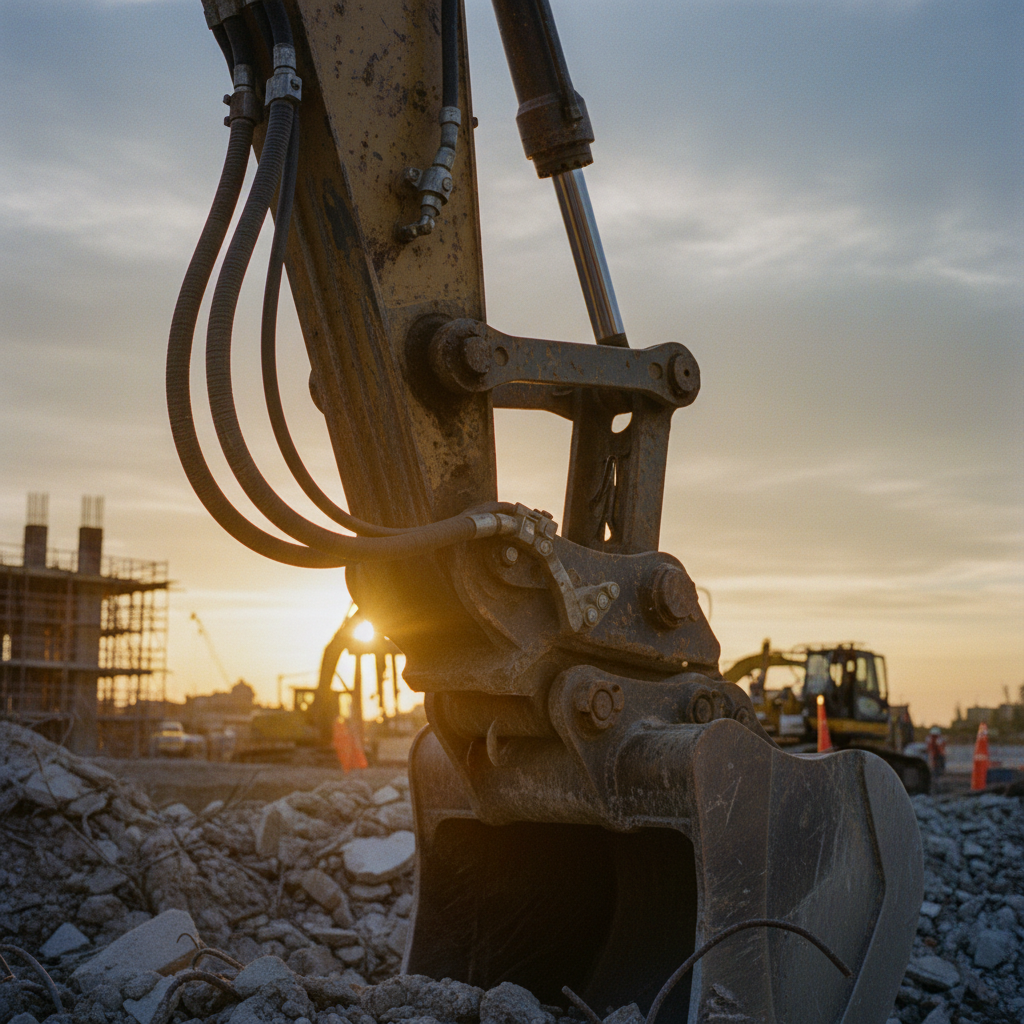
Hydraulic systems are unforgiving. A single weak point in a high-pressure line does not just mean a messy oil leak; it means expensive downtime, potential environmental fines, and serious safety hazards for your team. You need connections that hold fast when pressure spikes unexpectedly.
Here is the deal.
The reliability of your entire fleet often comes down to a small, frequently overlooked component: the connector. This guide cuts through the noise to explain exactly how you select, install, and maintain the right connection for your machinery, ensuring your operations stay leak-free and profitable. At Topa, we have spent decades perfecting these components to ensure your machinery keeps running.
1. What Is a Hydraulic Fitting and Its Primary Function?
A hydraulic fitting is a precision-engineered device designed to seal hydraulic fluid within a system while connecting conductors like hoses, pipes, and tubes to pumps, valves, and cylinders. These connectors act as critical bridges in fluid power systems, facilitating energy transfer through pressurized fluid without leakage.
You might be wondering, why are there so many shapes? The primary role involves more than just connection; it dictates flow direction and adaptation. A fitting must transition fluid between different port sizes or turn flow around tight corners efficiently.
- Connects flexible hoses to rigid ports.
- Adapters change thread standards (e.g., BSP to NPT).
- Facilitates secure hydraulic connections in extremely tight spaces.
Most fittings consist of a body (main structure) and a locking mechanism, such as a nut or a crimped ferrule. The geometry determines flow characteristics. You gain system integrity by understanding that a fitting functions as a flow facilitator, not just a plug.
| Component | Function | Material Example | |
|---|---|---|---|
| Body | Directs fluid flow | Carbon Steel | |
| Nut | Secures the seal | Stainless Steel | |
| O-Ring | Prevents weeping | Viton / NBR |
2. How Does a Hydraulic Fitting Work Under Pressure?

A hydraulic fitting functions by creating a compression seal that withstands outward force from hydraulic fluid, using either metal-to-metal contact or an elastomeric seal to block escape paths. When tightened, the fitting forces two surfaces together so tightly that pressurized oil molecules cannot pass through the interface.
Here is the kicker.
The thread itself does not always do the sealing. In many modern fittings, threads only provide holding power (torque tension) to keep sealing faces pressed together.
- Metal-to-Metal: A flare (like JIC 37°) deforms slightly to mate with a cone.
- Soft Seal: An O-ring compresses into a groove, filling imperfections.
Pressure in a hydraulic system is rarely static. It spikes and drops. The fitting absorbs these cycles without loosening. Threads stretch slightly (elasticity) to maintain tension, while the fitting body resists hoop stress from internal pressure. Your system safety relies on mechanical separation of holding force (threads) and sealing capability (seat/o-ring).
| Sealing Method | Mechanism | Pressure Tolerance | |
|---|---|---|---|
| Tapered Thread | Thread interference | Low/Medium | |
| Metal Flare | Surface deformation | High | |
| O-Ring Face | Elastomeric compression | Extreme |
3. Which Materials Are Best for a Hydraulic Fitting?
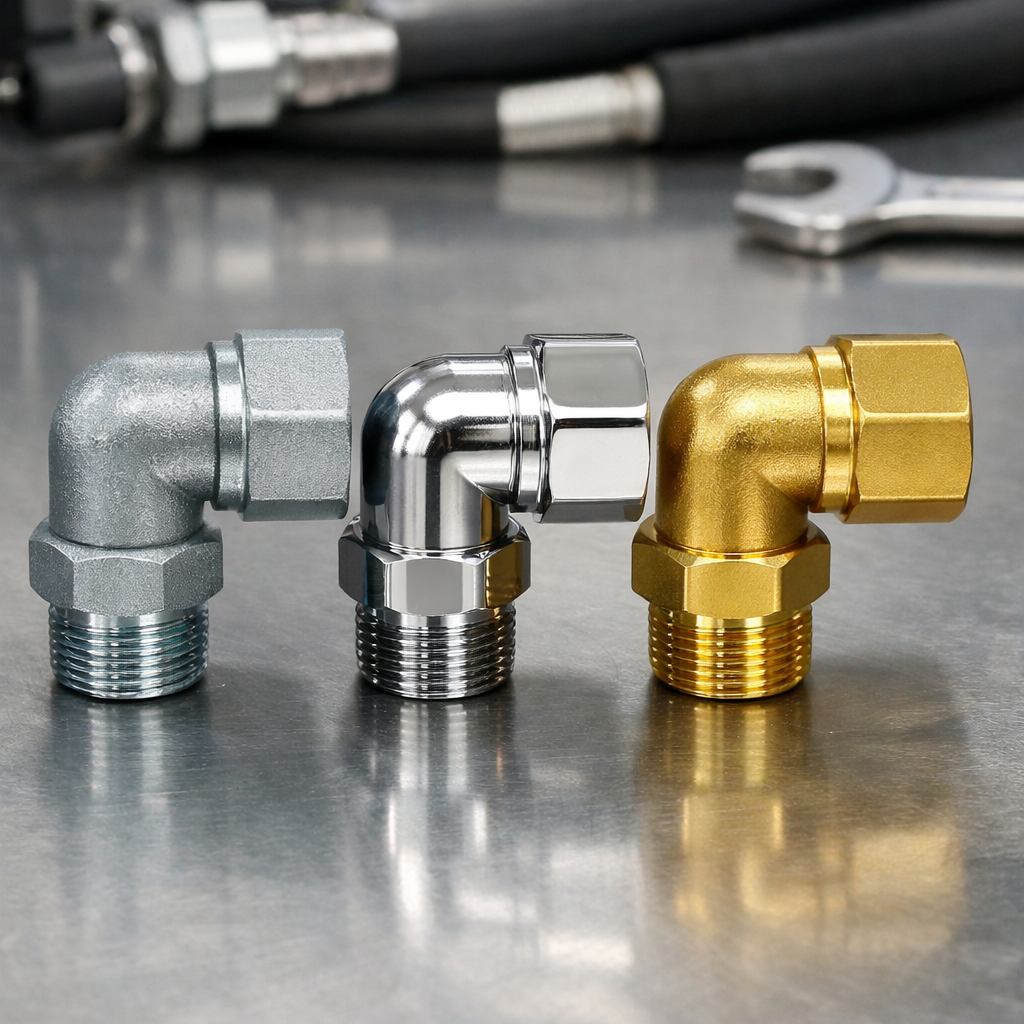
The material chosen for a hydraulic fitting determines its working pressure limit, corrosion resistance, and lifespan, with carbon steel being the industry standard for general industrial applications. Choosing the wrong material can lead to catastrophic galvanic corrosion or sudden structural failure under load.
Let’s be honest.
Carbon steel is the workhorse. It is strong, affordable, and durable when plated with zinc for rust protection. However, if you operate offshore or in chemical plants, carbon steel will rust.
- Carbon Steel: Best for construction and agriculture.
- Stainless Steel: Mandatory for marine or food processing.
Brass is soft. It machines easily but cannot handle pressure surges found in modern high-pressure spiral hoses . You should use brass for low-pressure coolant lines but avoid it for high-impulse hydraulic circuits. Matching material to environment prevents premature corrosion.
| Material | Pressure Rating | Corrosion Resistance | Cost | |
|---|---|---|---|---|
| Carbon Steel | High | Moderate (Plated) | Low | |
| Stainless Steel | High | Excellent | High | |
| Brass | Low | Good | Medium |
4. What Are the Main Types of Hydraulic Fitting Standards?
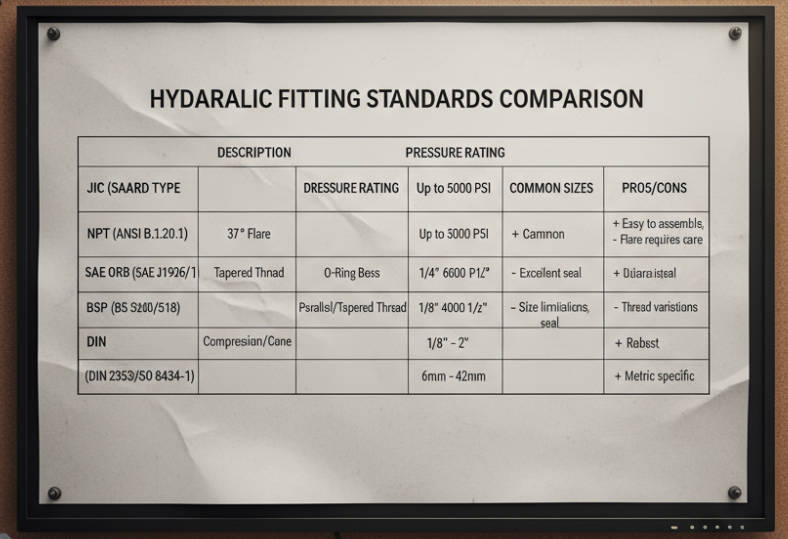
The main types of hydraulic fitting standards are global specifications like JIC, NPT, BSP, and ORFS, which dictate thread geometry and sealing angle to ensure compatibility across different machinery brands. Mixing these standards is the number one cause of workshop leaks and damaged threads.
You need to know this.
NPT (National Pipe Taper) is an older standard. It seals by jamming threads together. JIC (Joint Industry Council) uses a 37-degree flare. JIC is easier to re-tighten, whereas NPT is prone to leaking under vibration.
Modern machinery demands zero leaks. ORFS fittings use a rubber seal on a flat face. They are best for high vibration and virtually leak-free, though they require higher assembly torque. Standardization simplifies inventory and reduces risk of cross-threading incompatible parts.
| Standard | Full Name | Sealing Style | Region | |
|---|---|---|---|---|
| JIC | Joint Industry Council | 37° Flare | USA | |
| NPT | National Pipe Taper | Thread Taper | USA | |
| BSP | British Standard Pipe | 60° Cone / Flat | Europe/Asia | |
| ORFS | O-Ring Face Seal | O-Ring | Global |
5. Where Is a Hydraulic Fitting Used in Heavy Industry?
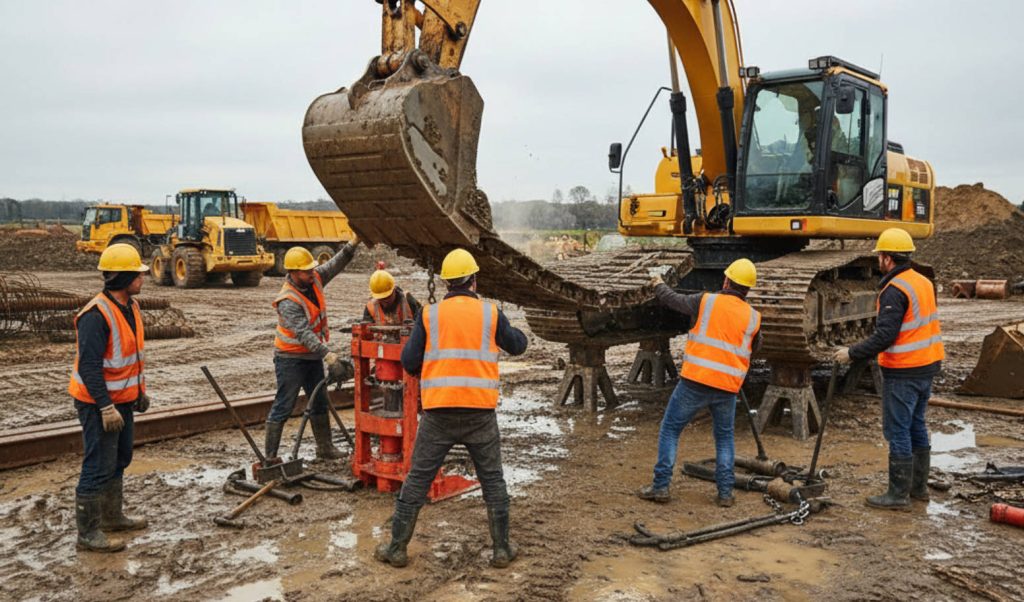
A hydraulic fitting is used wherever fluid power is required to move heavy loads, predominately in sectors like construction, aerospace, agriculture, and manufacturing automation. Without these connectors, fluid power generated by pumps could never reach actuators to perform work.
Here is the reality.
Excavators and loaders vibrate intensely. Fittings here must withstand constant shaking and dirt. You will find them on boom and arm cylinders, track drive motors, and steering systems. In factories, fittings connect power units to presses and injection molding machines. These environments demand precise movement control and high-cycle repetition. Clean environments require leak-free fittings (ORFS).
Application context dictates whether you need rugged vibration resistance or precision cleanliness. Knowing the application environment helps prioritize durability features.
- Mobile Machinery: Excavators, Cranes (High Vibration).
- Stationary: Injection Molding (Zero Leak).
- Agriculture: Tractors (Field Repairability).
6. How Is a Hydraulic Fitting Installed Correctly?
A hydraulic fitting is installed by first crimping it onto a hose or threading it into a port, followed by torquing it to specific manufacturer values to ensure metal or o-ring compresses exactly the right amount. Improper torque—either too loose or too tight—is the leading cause of immediate system failure.
Listen closely.
For permanent assemblies, you attach the fitting to durable hydraulic hoses using a crimper. Cut the hose square, insert the fitting tail fully, and crimp to specified diameter. Never guess torque. Over-tightening cracks the nut or flares the seat.
Mark nut position before tightening. Use “flats from wrench resistance” method if a torque wrench isn’t available. Always lubricate O-rings before installation. Precise installation procedures eliminate “human error” factors in hydraulic leaks.
| Step | Action | Consequence of Error | |
|---|---|---|---|
| Prep | Clean threads | Contamination entry | |
| Insertion | Push to bottom | Blow-off under pressure | |
| Torque | Use spec sheet | Cracking or Leaking |
7. How Do You Choose the Right Hydraulic Fitting?
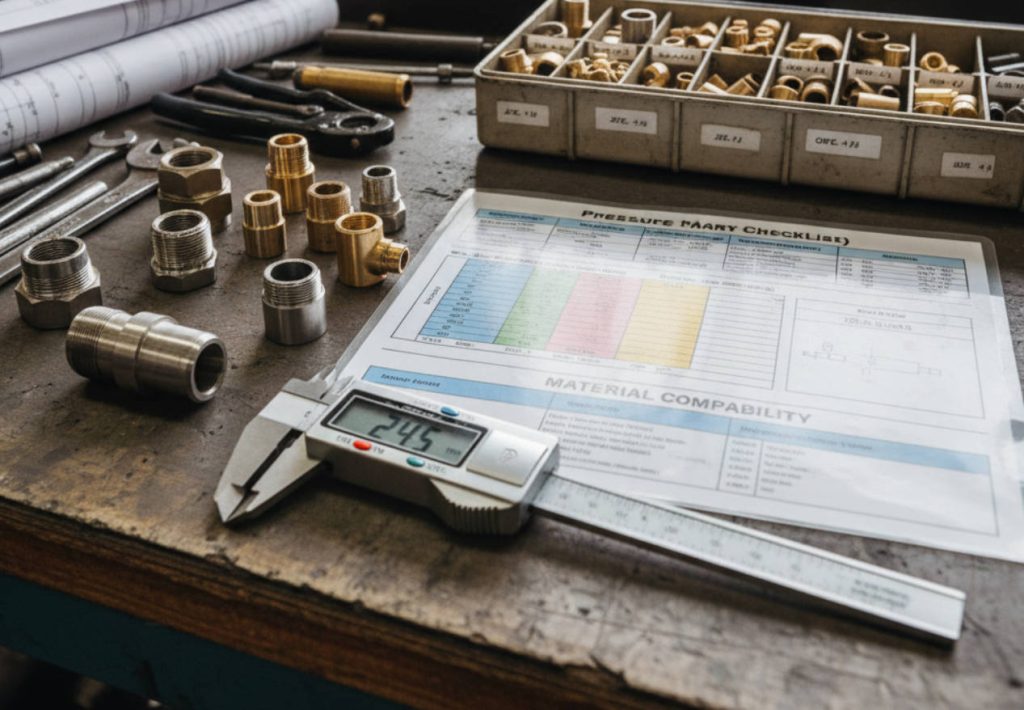
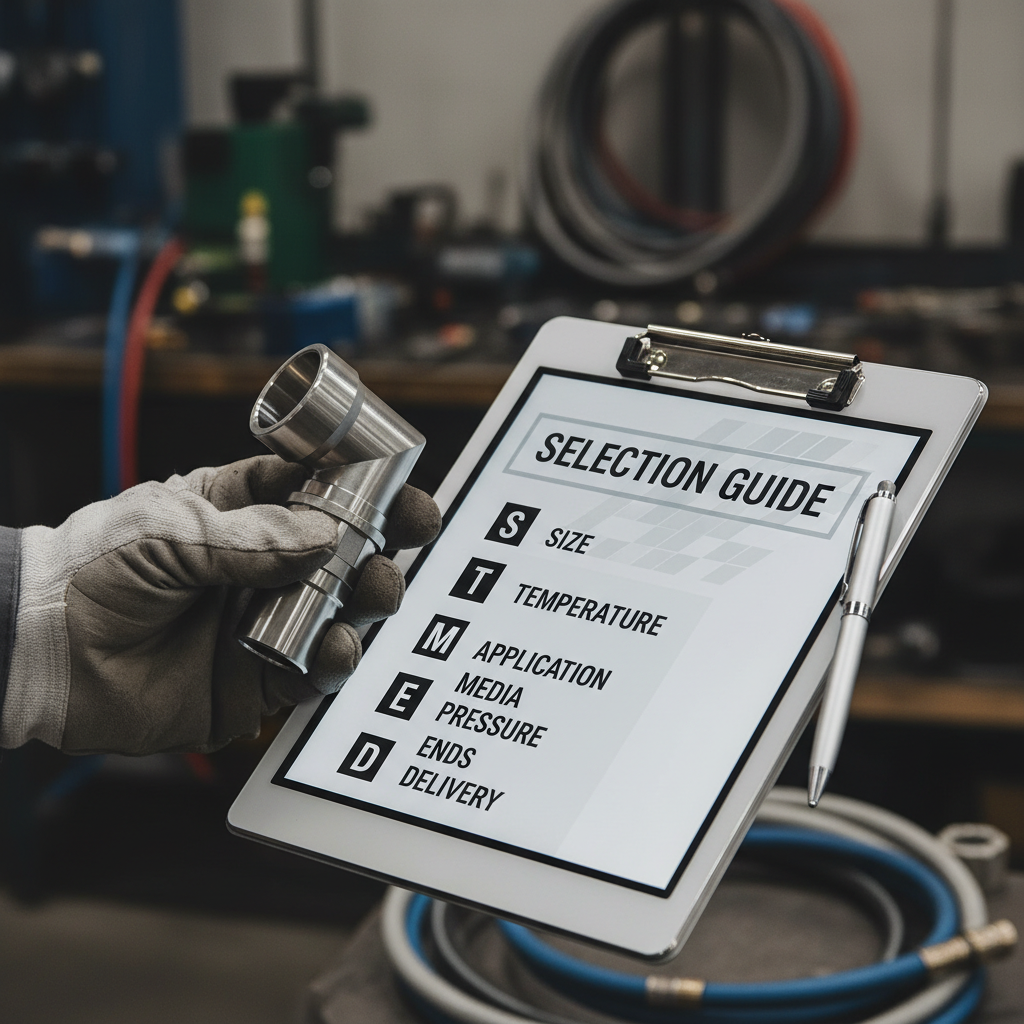
You choose the right hydraulic fitting by using the STAMPED method—Size, Temperature, Application, Media, Pressure, Ends, and Delivery—to systematically match component to system operational limits. Ignoring even one variable creates a weak link in your fluid power chain.
This is critical.
A fitting rated for 3,000 PSI cannot be used on a 5,000 PSI line, even if it fits. Check dynamic versus static pressure ratings. Ensure seals (O-rings) can handle fluid temperature. Not all O-rings handle all oils. Standard Buna-N (Nitrile) works for petroleum, while phosphate ester fluids require Viton or EPDM seals.
The STAMPED framework provides a fail-safe checklist for procurement. Systematic selection prevents catastrophic incompatibility issues.
| Acronym | Factor | Consideration | |
|---|---|---|---|
| S | Size | ID and OD match flow needs? | |
| P | Pressure | Exceeds system max surge? | |
| M | Media | Chemical compatibility? | |
| T | Temp | Soft seal limits? | |
| E | Ends | Thread type match? |
8. What Are the Advantages of a Quality Hydraulic Fitting?
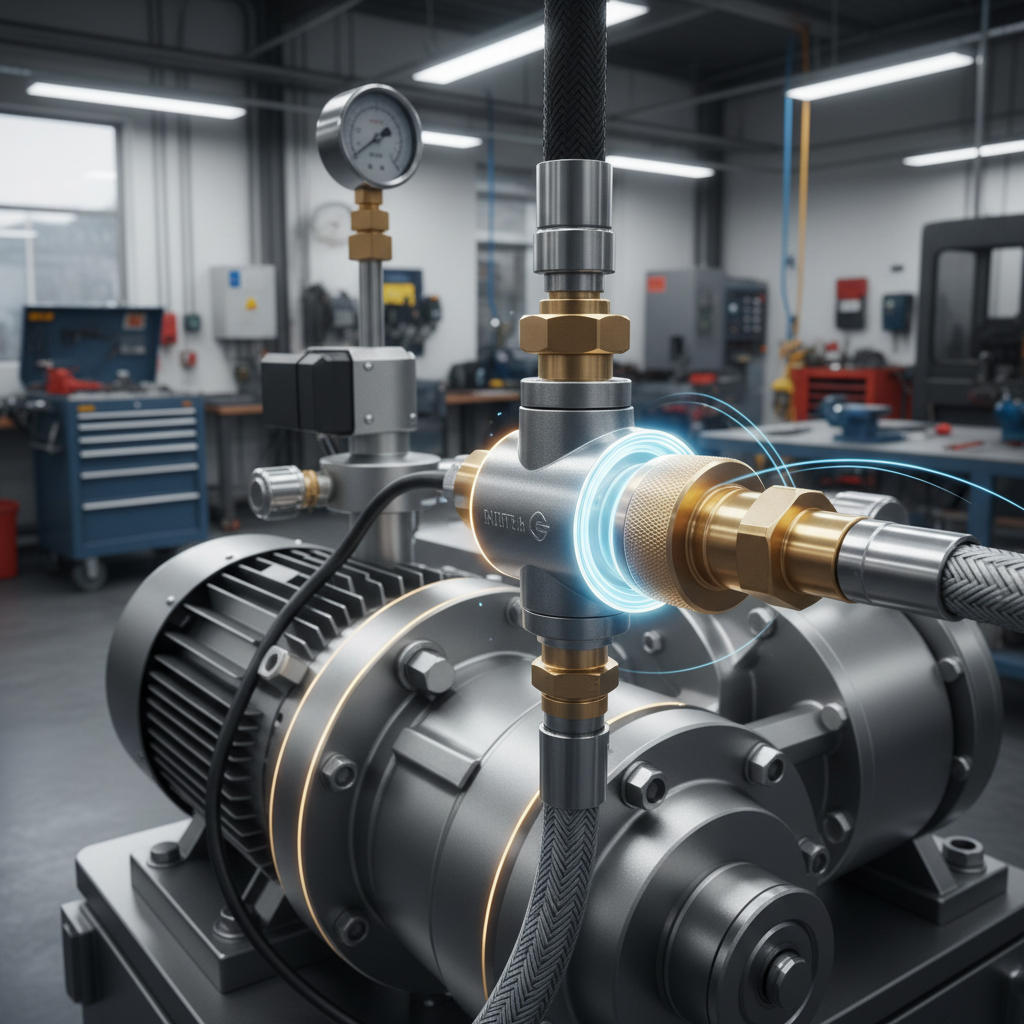
The advantages of a quality hydraulic fitting include superior leak protection, extended system uptime, and enhanced safety for operators working near high-pressure lines. Investing in premium fittings reduces total cost of ownership by minimizing maintenance intervals and oil replacement costs.
Here is the kicker.
A burst fitting sprays hot oil like a bullet. High-quality fittings have consistent metallurgy, tested burst pressures, and traceable manufacturing batches. This reduces risk of injection injuries. Leaking oil is money on the floor. Quality fittings prevent environmental cleanup fines and keep machines running longer between services.
Topa manufacturing capabilities ensure that every fitting starts life with precise tolerances. Quality fittings act as an insurance policy for your equipment.
- Safety: Prevents blowouts.
- Efficiency: No fluid loss.
- Durability: Resists corrosion.
9. Why Does a Hydraulic Fitting Fail Prematurely?
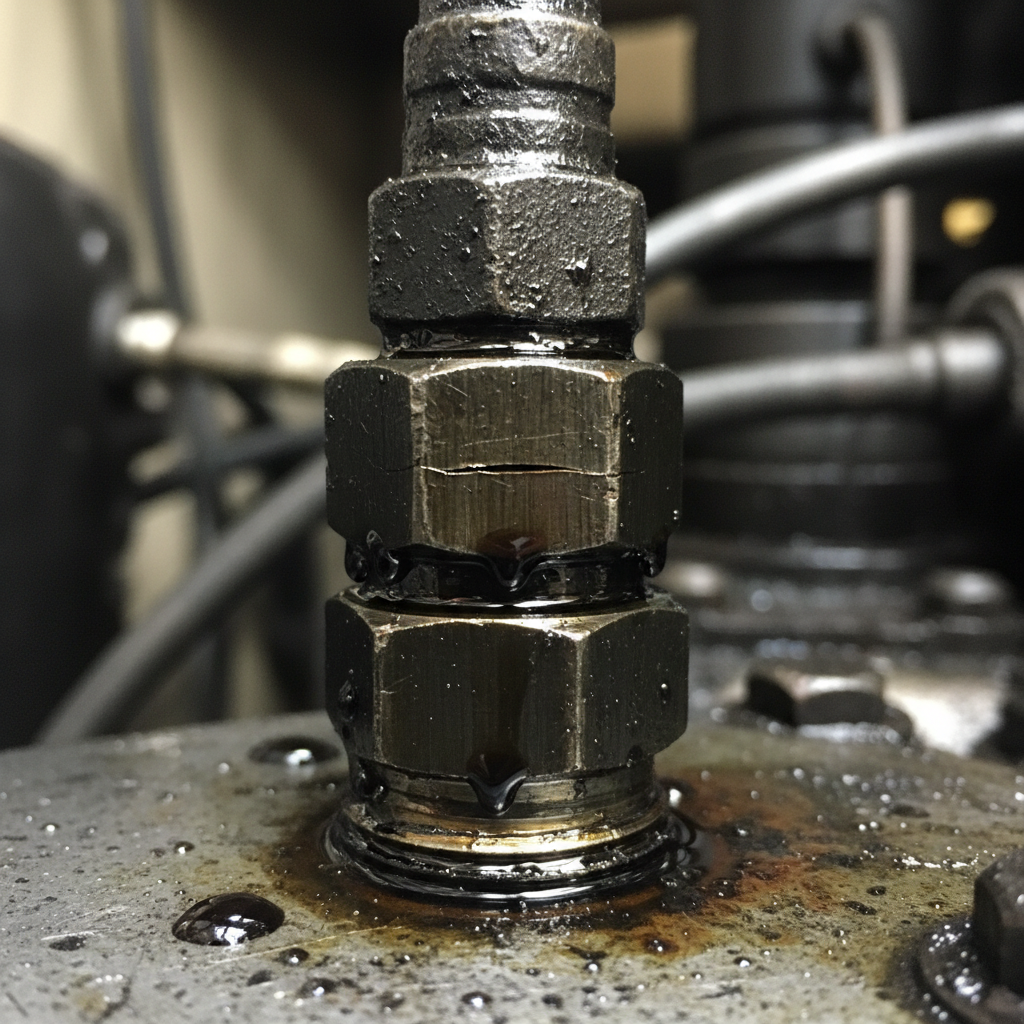
A hydraulic fitting usually fails due to improper installation torque, excessive system vibration, or using materials incompatible with environmental conditions. Identifying root cause of failure is the only way to prevent it from happening again on the same machine.
You might be surprised.
Most failures happen because a mechanic tightened the nut “as hard as possible.” Over-torquing expands female nuts, crushes 37° flare noses, and extrudes O-rings out of grooves. Hydraulic lines pulse, and vibration loosens threads over time. Use clamps to support heavy hoses near fittings. Switch to O-Ring Face Seals (ORFS) in high-vibration zones.
Failure analysis usually points to human error or application mismatch, not parts themselves.
| Failure Mode | Cause | Prevention | |
|---|---|---|---|
| Cracked Nut | Over-torque | Use torque wrench | |
| Weeping | Vibration loosening | Pipe supports / Loctite | |
| Rust | Wrong material | Use Stainless / Zinc Plate |
10. How Do You Maintain a Hydraulic Fitting for Longevity?
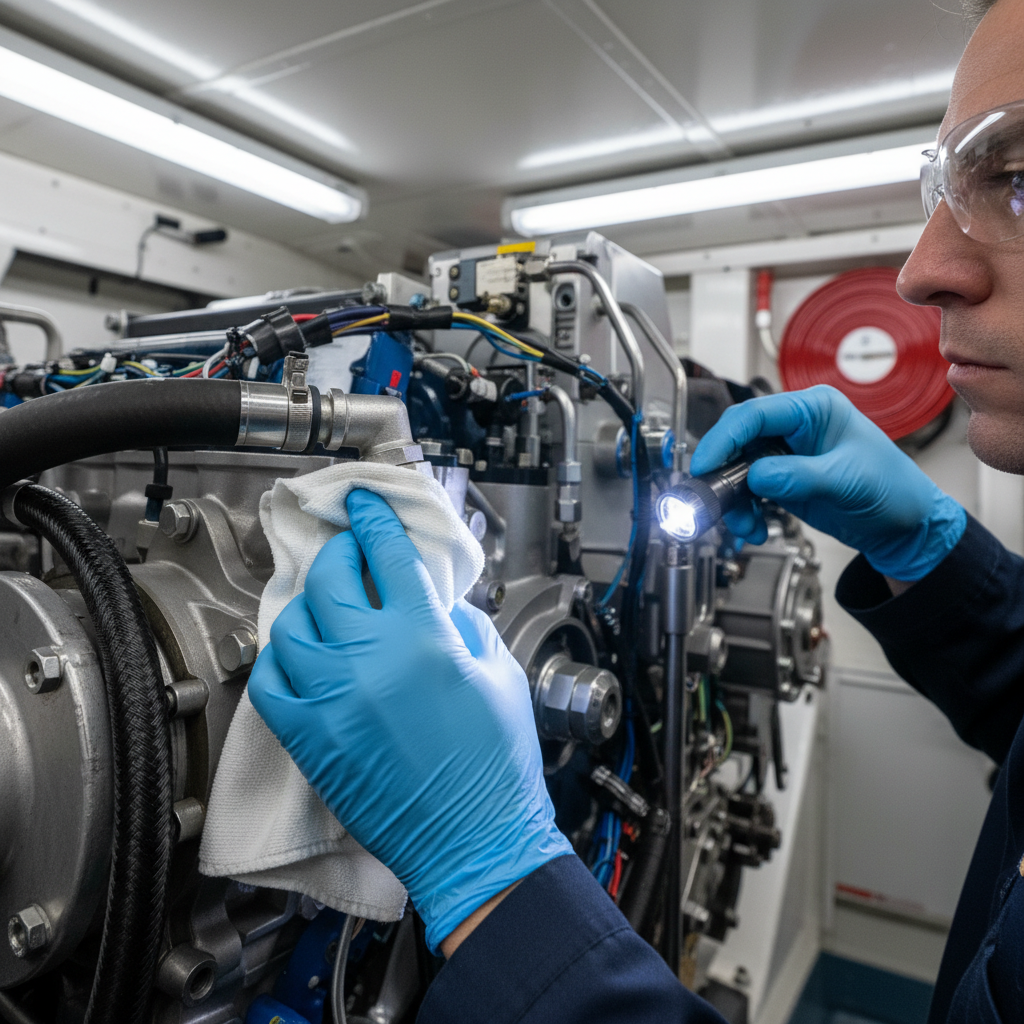
You maintain a hydraulic fitting by establishing a routine inspection schedule that checks for signs of corrosion, moisture, and weeping, rather than waiting for catastrophic failure. Proactive maintenance involves re-torquing to spec (not just tightening blindly) and replacing O-rings whenever a connection is disturbed.
Here is the strategy.
Do not touch it if it is dry. If it is wet, investigate. Look for “weeping” (oil dampness) at threads. Check for rust on nuts or bodies. Ensure hose clamps haven’t rubbed against fittings. Maintenance becomes easier when you start with high-grade components.
Maintenance is about observation and verification. A solid maintenance plan extends lifecycle of entire hydraulic assemblies.
- Visual Check: Daily/Weekly.
- Torque Check: Monthly/Quarterly.
- Replacement: During Hose Change.
Conclusion
Hydraulic fittings are unsung heroes of industrial power. They dictate safety, efficiency, and reliability of your machinery. Whether you deal with high-vibration construction equipment or precision manufacturing lines, right choice of fitting prevents costly downtime and dangerous leaks.
At Topa, we see beyond metal. We see critical roles these components play in your business success. By combining advanced manufacturing with rigorous quality control, we deliver connections you can trust under pressure.
Contact us today to discuss your hydraulic requirements and secure your supply chain.
FAQ
Q1: Can I mix hydraulic fitting brands if the size is the same?No, it is generally not recommended. While threads may be standardized (like JIC or NPT), manufacturing tolerances and seating angles can vary slightly between brands. Mixing them can result in micro-leaks or reduced pressure holding capability.
Q2: Is a stainless steel hydraulic fitting always better than carbon steel?Maybe, but it depends on your environment. Stainless steel offers superior corrosion resistance for marine or chemical applications, but it is more expensive and can be prone to thread galling if not installed correctly. For standard dry environments, carbon steel is often sufficient and more cost-effective.
Q3: Can I reuse a hydraulic fitting after taking it apart?Yes, but with conditions. The metal body is usually reusable if it shows no signs of deformation or cracking. However, you must always replace the soft seals (O-rings) every time you disconnect the fitting to ensure a proper seal upon reassembly.
Q4: How do I know if I need to skive my hydraulic hose for the fitting?It depends on the fitting type you purchase. “Skive” fittings require you to remove the outer rubber layer of the hose to grip the wire reinforcement directly. “Non-skive” fittings bite through the rubber cover. You must match the fitting style to your assembly equipment and hose type.
Q5: What is the most common cause of hydraulic fitting leaks?Improper torque is the leading cause. Many technicians overtighten fittings, believing tighter is better. This actually damages the sealing surfaces (flares) or cracks the nut. Under-tightening is also a risk, but over-tightening is the more common destructive error.